

A Thoughtful Approach to Program Design
Rainbow Acres’ Programs team builds weekly schedules that include classes, work-based activities, clubs, and community participation. Ranchers review available options with staff, select activities based on their interests and goals, and follow a consistent weekday routine. Staff provide written schedules, verbal prompts, and hands-on support to help Ranchers arrive on time, transition between activities, and complete tasks. Program adjustments are made based on participation, skill development, and individual support needs.
Therapeutic Engagement Through Horse-Riding
The horse-riding program includes grooming, leading, and riding activities under staff supervision. Ranchers brush and care for horses, clean tack, and follow established safety procedures. Leading exercises involve guiding a horse through gates, along marked paths, and around obstacles using verbal cues and hand signals.
Riding sessions focus on balance, posture, and coordination, with Ranchers practicing starting, stopping, turning, and maintaining rhythm at a walk. Groundwork activities include waiting for a horse to respond before moving forward, completing tasks in a set order such as haltering before leading, and building familiarity through repeated, calm interaction. These activities require Ranchers to follow sequences, regulate movement, and respond to feedback from the horse.
Hands-On Learning in the Greenhouse
In the greenhouse, Ranchers participate in planting seeds, transplanting seedlings, watering on set schedules, pruning plants, and harvesting produce. Tasks are demonstrated by staff and then completed step-by-step, often using checklists or visual cues. Ranchers measure soil, label plant trays, track growth, and clean tools after use.
Work is completed individually and in small groups, reinforcing task sharing and cleanup routines. Ranchers see the results of their work over time as plants grow, which supports understanding of responsibility and follow-through.
Structured Growth With Project Discovery
Project Discovery is used to guide instruction in areas such as workplace behavior, communication, and task responsibility. Ranchers practice skills such as following instructions, asking for help, managing time during activities, and completing assignments within a set timeframe. Goals may include staying on task for a full activity period, using appropriate communication during group work, or completing steps without prompts.
Staff review progress with Ranchers, adjust goals as skills improve, and apply the framework across multiple program settings to reinforce consistency.
Life Skills That Build Independence
Life skills classes include preparing simple meals using recipes, measuring ingredients, using kitchen appliances safely, and cleaning up work areas. Ranchers practice grocery planning, identifying items on a list, comparing prices, and handling money. Other activities include organizing personal spaces, sorting laundry, managing daily schedules, and practicing basic budgeting with real or simulated currency.
Instruction emphasizes repetition and practice within familiar environments so skills can be applied during daily routines at the Ranch.
Interest-Based Clubs and Social Connection
Interest-based clubs meet on a set schedule and follow structured activities. Scrapbooking groups organize photos, measure layouts, and complete projects over multiple sessions. Bike riding clubs review safety rules, fit helmets, follow designated routes, and practice signaling and awareness. Knitting groups learn basic stitches, count rows, and follow patterns with staff guidance. Language clubs focus on simple vocabulary, greetings, and conversational practice through repetition and group participation.
These clubs provide consistent opportunities to practice turn-taking, conversation, and shared problem-solving.
Community Engagement and Service
Community engagement activities give Ranchers regular opportunities to contribute through hands-on service in partnership with local organizations. Ranchers participate in activities such as bell ringing for the Salvation Army, assembling care packages, supporting food banks, and assisting at community events. Tasks may include sorting donations, greeting members of the public, following event instructions, and working assigned shifts.
These experiences require Ranchers to follow schedules, work as part of a group, and interact with people outside the Ranch. Participation supports familiarity with public spaces and reinforces appropriate workplace and community behavior.
Music, Worship, and Creative Expression
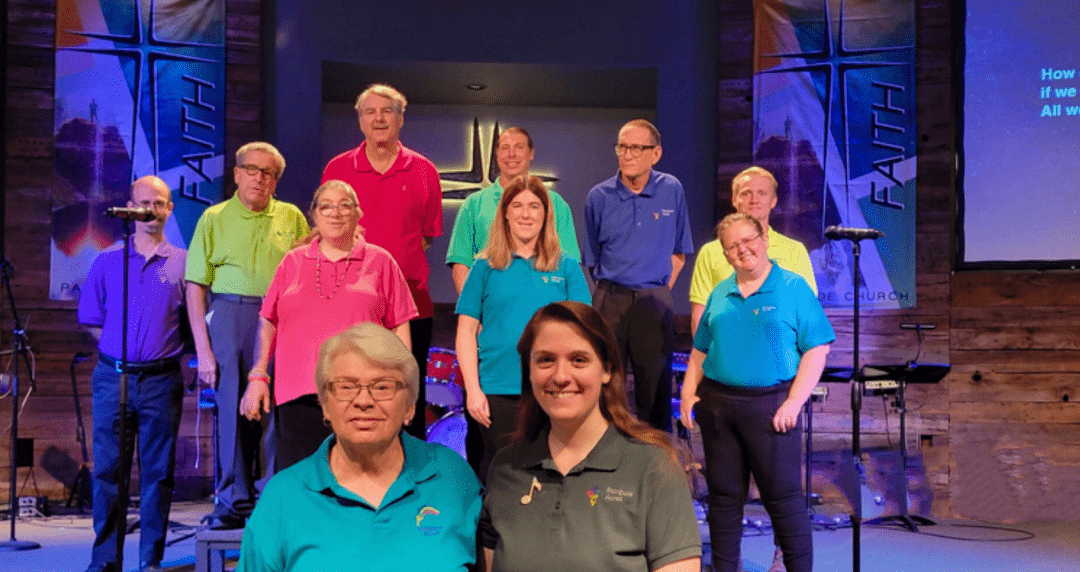
Music programs include choir rehearsals, group singing, rhythm exercises, and keyboard instruction using Clavinova instruments. Ranchers practice following musical cues, keeping tempo, and listening to others during group pieces. Choir preparation includes learning lyrics, rehearsing entrances and exits, and participating in performances.
Worship and music activities provide structured opportunities for reflection, participation, and shared expression within a faith-centered setting.
Learning Within a Supportive Community
Rainbow Academy operates on a consistent weekday schedule that mirrors a work and learning day rather than a traditional classroom model. Each day is organized into defined activity blocks, typically including morning check-in, skill-based classes, work or vocational activities, lunch, afternoon electives or clubs, and end-of-day review.
Participation is reinforced through attendance, punctual transitions between activities, and completion of assigned tasks within each block. Ranchers follow posted schedules, move with staff between locations such as classrooms, the greenhouse, the barn, and common areas, and are expected to engage for the full duration of each activity.
Personal goal-setting is built into program planning through regular review of individual objectives tied to life skills, vocational readiness, and social participation. Goals may include completing an activity without prompts, following a multi-step process independently, participating in group discussions, or managing time during transitions. Staff track progress during daily activities and adjust instruction, expectations, or support levels based on observed performance.
Skills introduced in one setting are practiced in others. For example, task sequencing learned in cooking classes is reinforced in greenhouse work, and communication skills practiced in clubs are applied during community service activities. This repetition across structured settings supports consistency and continued skill development throughout the week.
Although Rainbow Academy is not a traditional school, its programs keep Ranchers engaged in learning and personal development. Through life skills instruction, faith-based activities, creative programs, and community connection, Rainbow Acres supports each Rancher’s growth within a respectful and supportive environment.